
A collection of Solo Exhibitions
Artists: StreetMax (United Kingdom), Jingyin Che (China), Suokwon Yoon (South Korea) and Margaret Courtney-Clarke (Namibia)
Venue: Art Gallery at the Central Library
Address: 1 Parade Street, Cape Town
Opening: Friday 4 September 3 – 5 pm. Opening Address by Alex Chen (Hisense)
Exhibition End Date: 26 September 2026
Artist: STREETMAX
Exhibition title: 030717-250325 (2017 – 2025)
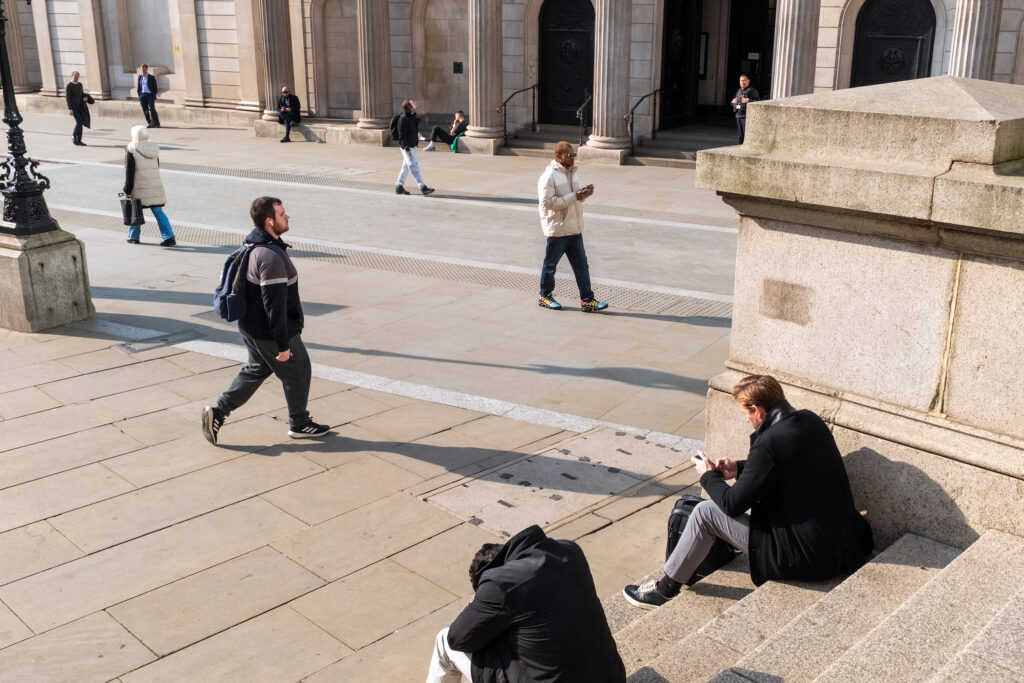
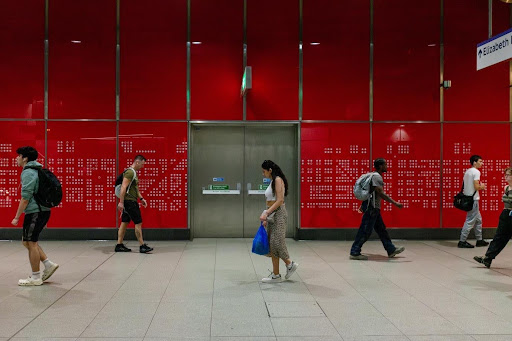
In the tradition of straight photography, there are no tricks here. There is waiting, often for long periods, for the right organic distribution of people to form precise compositions. The rigid compositional style and exact creative execution is key. The intention is to unsettle. The photographer uses a handheld camera. This is not a breach in control as the camera movement repays the automaton-like movement of its subjects. The resulting images seem fictitious and constructed but are nevertheless shot in real time. The attempt at rendering an other-worldly street scene creates tension between appearance and reality.
There is a challenge in how we interpret the photographic evidence and where we place the boundary between artifice and observation. The images depict non-speaking city dwellers who are spatially
arranged as if carefully directed. Acting like preconditioned self-absorbed passersby the city dwellers
become anonymous ciphers. The ciphers have no visible connection to one another except
where they are when a photograph is taken. The images are simple recordings of a walking choreography with isolated ciphers in mundane tableaux. The ciphers’ apparent exact placing emits an unnerving metaphor and surreal reflection of our own reality/predicament. This technique may appear bland, but it utilizes a visual language which is unique and compelling, reflecting a stark world around us.
StreetMax’s latest book, Cipher City will be on view.
Artist: Jingyin Che
Exhibition title: Harmless: to be proven
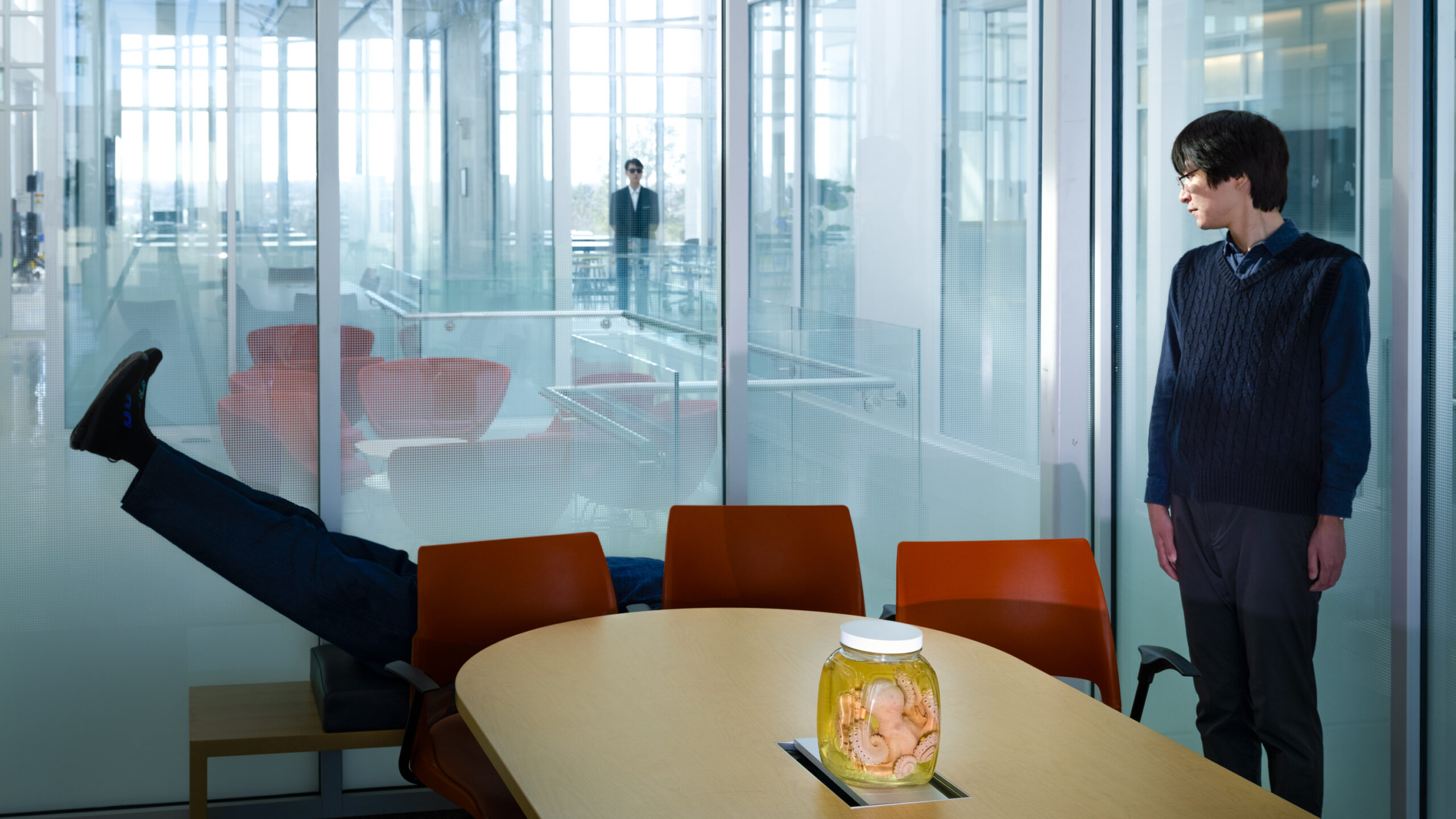
The exhibition examines the long-standing and often invisible precarity faced by Chinese scholars in the United States. The project approaches truth not as a stable fact to be captured, but as something shaped by power, suspicion, and institutional interpretation. In this context, truth becomes a burden of proof: to be Chinese, foreign-born, and working within American scientific or technological institutions is to live under the possibility of being misread as a risk, a symbol, or a threat.
When I first arrived in the U.S. to study physics, I believed academia existed apart from politics. That belief changed as I moved into engineering and became more aware of surveillance, institutional mistrust, and the aftereffects of post-2016 investigations targeting Chinese researchers. I began to understand how a scholar could be turned into a political narrative, how a small mistake could be read as evidence, and how fear could quietly enter daily academic life.
Because this social truth is difficult to document directly, I use staged photography rather than a purely documentary approach. Drawing from interviews, observation, and shared unease, I construct narrative tableaux in which scholars move through institutional spaces shaped by control and uncertainty. Exaggerated gestures, suspended actions, and surreal relationships between bodies and objects reveal how pressure becomes internalized.
By staging what cannot easily be proven, Harmless: to be proven challenges photography’s relationship to truth. The project asks what kind of truth can be carried by fiction, performance, and constructed images, and how those marked by suspicion are forced to continually prove their innocence within systems that have already begun to doubt them.
Artist: Suokwon Yoon
Exhibition Title: Where has the Water Gone
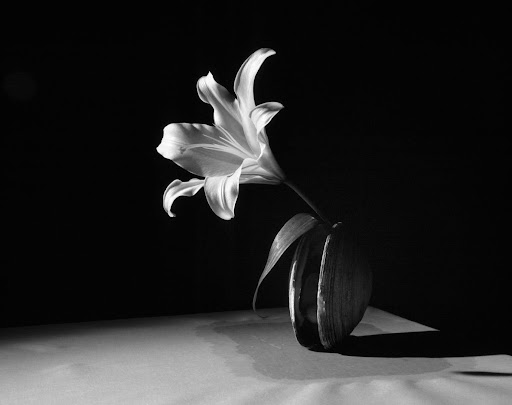
Suokwon Yoon’s photographs transform aquatic life into poetic meditations on displacement, vulnerability, and the human condition. Fish, mussels, and other natural forms are removed from the environments that once sustained them, becoming quiet reflections on memory, loss, and resilience.
Through carefully composed still life compositions, Yoon explores the fragile space between presence and absence, revealing the unexpected beauty and dignity that emerge at the threshold of disappearance.
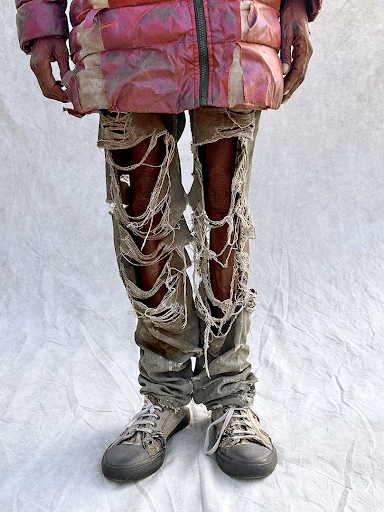
/Ui N/Ani in his winter coat. Grashoek, Otjozondjupa Region, Namibia
Artist: Margaret Courtney-Clarke
Exhibition Title: Disparities of Time (from the series When Tears Don’t Matter, 2026)
At the heart of this new series lies a humanitarian crisis – of people caught between worlds. Over the past seven years my journeys into the Kalahari have taken me across thousands of kilometres of sand and bushveld, from conservancies to resettled farms, from ‘Cultural Villages’ to peri-urban
squatments and so-called ‘locations’ to record the entangled relationship between self and ‘other’ in
contemporary Namibia.
What is crucial in this work is to give place to a voice in search of a listener. These photographs are not a
product of a singular, dramatic news event, but rather the recording of the daily lives of those who call
themselves Bushmen. A ‘shadow people’, largely invisible to the outside world, living in some of the
remotest areas in the Kalahari Desert, they are currently locked into a desperate time in the history of
Namibia.
Their situation is born of the injustices of the past, exacerbated by the deprivations of drought, the fencing off of large tracts of land and by current governmental indifference. My aim is to connect with viewers by bringing awareness to human-ness, to stimulate debate, bring injustices to light, and to educate (where governments and press have failed). This is a social process, an ongoing relational conversation, rather than a conclusion. The journey is a demand on myself, and my viewers, to look both beyond and within oneself. It is also, hopefully, to find an antidote to despondency.
I try to focus on the feelings of solitude as well as documenting the extraordinary realities of ordinary
people’s lives, to expose the dynamics of discrimination in everyday life … how people present themselves
in their surroundings…
Photography is about empathy – creating understanding and intimacy while confronting contemporary
social issues such as inequality and human rights violations. In the end it is important to make work that matters … to explore how photography can demystify stereotypes and interpret memory and history in a region where the medium has failed to provide an equitable depiction of its people.
Exposure through the platform of the Cape Town Photography Festival will contribute greatly to expanding
its reach.
(Margaret Courtney-Clarke, July 2026)

