
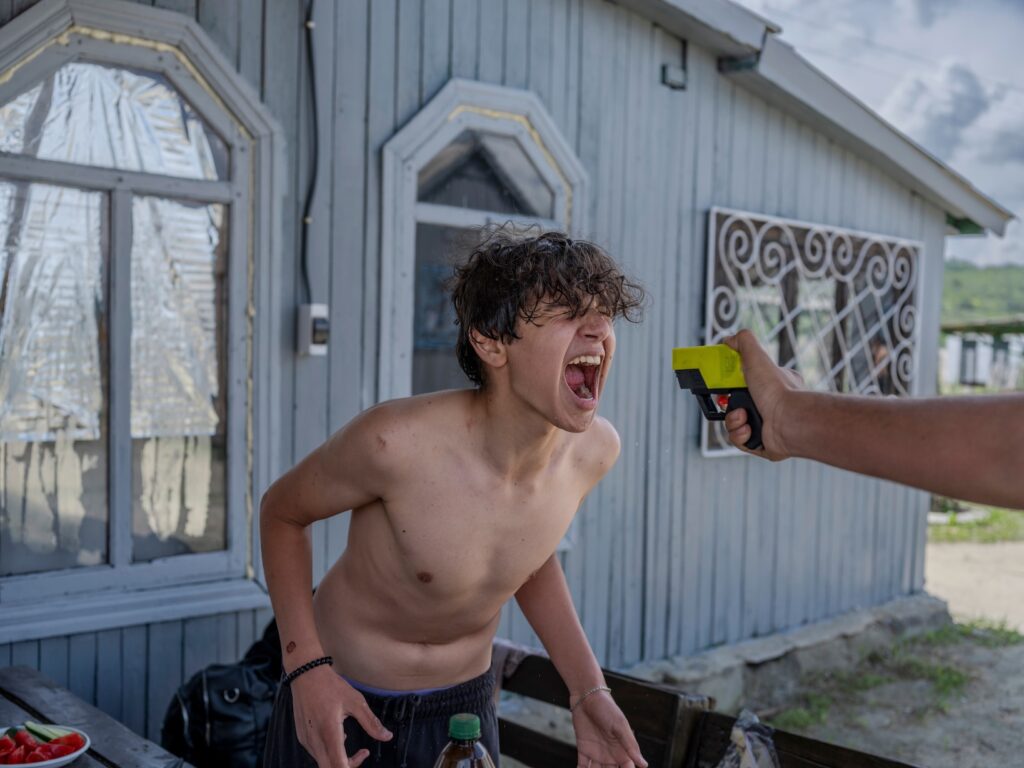
Exhibition Type: Digital Portfolios
Artist(s):
Alain Schroeder (Belgium)
Mohamed Amin (1943-1996) (Kenya)
Gideon Mendel
Felix Dlangamandla
Oleksandr Rupeta (Ukraine) illustrated
Venue: First Floor Tevolution Museum
Address: Long Street, Cape Town
Opening: 03 September 2026, 18:00
Exhibition Dates: 25 September 2026, 17:00
Description:
This presentation brings together a selection of photographs and films that explore photography’s enduring role as witness to history. Spanning several generations and geographical contexts, the works on display document moments of political change, conflict, resilience, and everyday life, demonstrating the power of the photographic image to inform, challenge, and preserve collective memory.
Our sincere thanks to Salim Amin for granting permission to present the work of the late Mohamed Amin, whose photography remains one of the defining visual records of African history.
We extend our appreciation to Rita Potenza for her assistance in facilitating the presentation of Gideon Mendel’s long-term documentary practice.
Our thanks to Alain Schroeder (Belgium) for granting permission to present his acclaimed series Chains of Madness, photographed in Indonesia.
We are grateful to Oleksandr Rupeta (Ukraine) for sharing his recent work documenting the ongoing conflict in the Donbas region.
Special thanks to Felix Dlangamandla, photojournalist with the Daily Maverick, whose work continues the vital tradition of bearing witness to contemporary South African society.
Together, these contributions remind us that photography does more than record history—it bears witness, preserves memory, and continually invites us to question the truths that images both reveal and construct.
We are also pleased to screen two short films, The Sound Man (2015)) and Stand Together As One (2025) at this venue. Both screenings will be introduced by Salim Amin.

