
Exhibition Type: Solo Exhibition
Artist(s): Alf Kumalo
Venue: Peffers Art
Address: First Floor, Radio house, 92 Loop Street, Cape Town
Opening: 3 September 2026, 18:00
Exhibition End Date: 26 September 2026
Description:
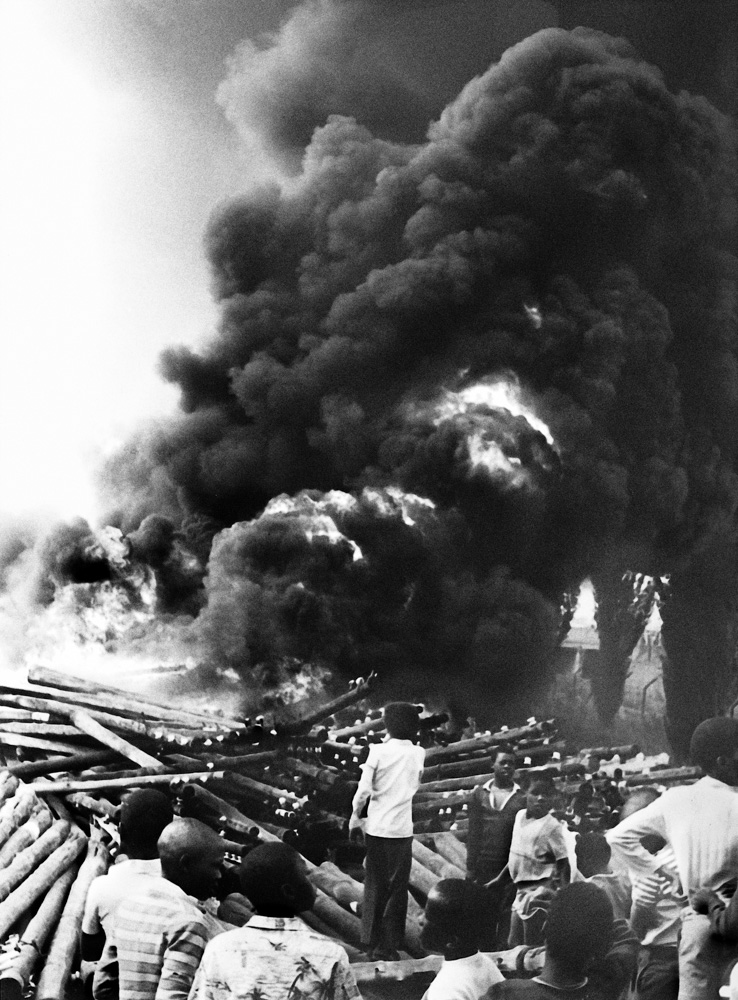
The ten photographs gathered here do not describe a single day. They trace a political atmosphere of pressure that preceded 16 June 1976, the rupture of the uprising itself, the violence of the apartheid state, the work of mourning, and the emergence of youth as one of the decisive forces in South Africa’s liberation
struggle. In this sense, the collection should be read as a visual essay on what might be called the long 1976.
Alf Kumalo’s camera moves through streets, courts, stations, church space, cemetery processions and buses. These are not simply locations; they are charged sites in the making of modern South African political
consciousness. The images are fragments of a national conscience – smoke and dust, funerals and buses, Regina Mundi, Mzimhlope, Khwezi Station and Doornkop Cemetery.
The Soweto Uprising was sparked by the apartheid state’s attempt to impose Afrikaans as a medium of instruction in Black secondary schools, but its deeper cause lay in the entire architecture of Bantu Education. The Bantu Education Act, implemented in the 1950s, placed Black schooling under the logic of apartheid
labour control. Its curriculum and funding structures were designed not to liberate the mind but to discipline it, preparing Black children for subordination in a racially ordered economy. The system trained children for manual and menial labour and Black schools received only a fraction of the funding given to white
schools. By 1976, the classroom itself had become a political battlefield.
On 16 June 1976, more than 20,000 learners in Soweto marched against this system. The march began as a disciplined act of student protest, but police responded with teargas and live ammunition. The uprising then spread into a wider confrontation between a young generation and the apartheid state.

